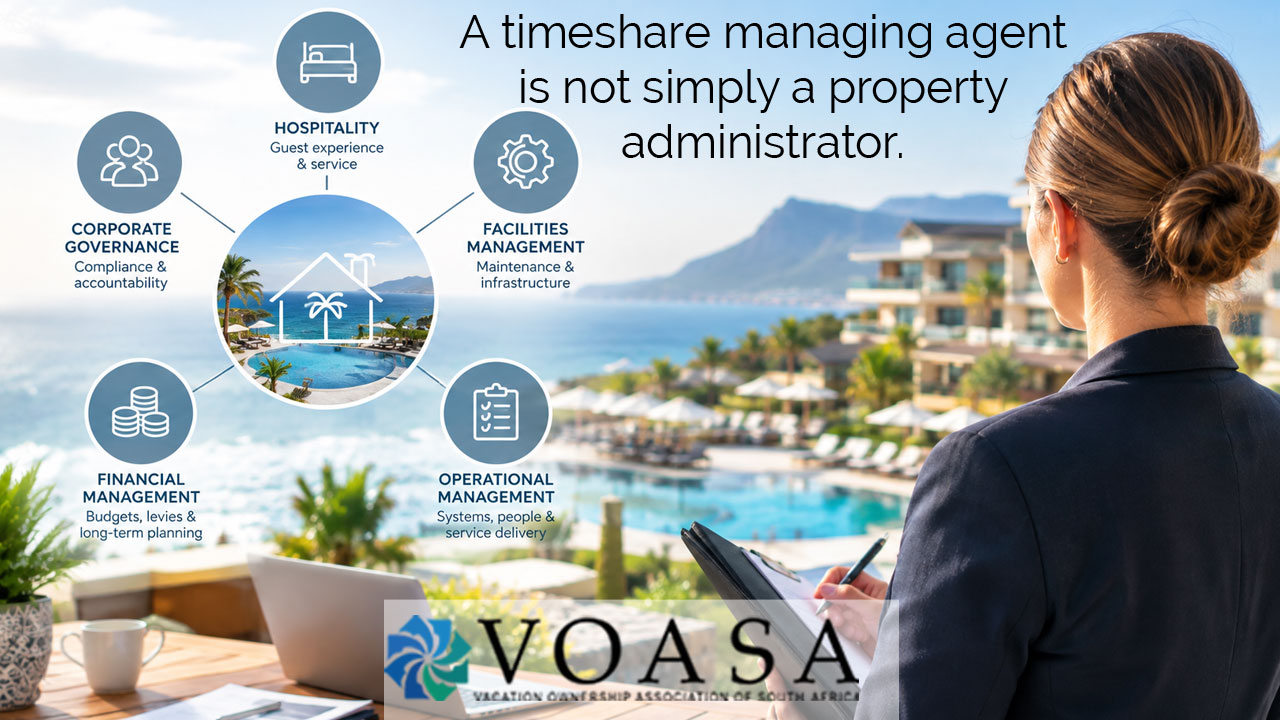
The role sits at the intersection of hospitality, facilities management, operational management, financial management and corporate governance. That makes it significantly broader than the role traditionally associated with a managing agent.
In a vacation ownership environment, the consumer is not merely an owner contributing levies to maintain a property. The consumer is also a guest expecting a consistent holiday experience.
This means the managing agent must often function as a hospitality operator, overseeing accommodation standards, housekeeping, reservations, guest services, maintenance, recreational facilities and, in some cases, food and beverage operations.
The role also extends into full facilities management. Resorts require constant attention to buildings, common areas, pools, gardens, infrastructure and long-term maintenance planning. Preventative maintenance and capital replacement programmes are particularly important because deferred maintenance ultimately affects both the consumer experience and the financial sustainability of the scheme.
Financial management is another core responsibility. Managing agents may administer significant levy income and operating budgets and must balance day-to-day operational needs with longer-term capital requirements. Good budgeting, financial controls, reporting and responsible expenditure are therefore fundamental.
Corporate governance is equally important. Timeshare managing agents frequently support boards, trustees, directors and management associations with reporting, meetings, record keeping, implementation of decisions and regulatory compliance.
For the consumer, these functions are all connected.
Poor financial management affects maintenance. Poor maintenance affects the holiday experience. Weak governance affects accountability. Weak operations affect service delivery.
The true measure of an effective timeshare managing agent is therefore not simply whether levies are collected or contractors are appointed. It is whether the scheme is financially sustainable, properly governed, well maintained and capable of consistently delivering the holiday experience owners reasonably expect.
That is why professionalising timeshare management matters.
A well-managed resort protects far more than buildings. It protects owners’ contributions, the long-term viability of the scheme and the value consumers receive from their vacation ownership.
For VOASA, strong operational management, sound financial stewardship and ethical governance remain central to building consumer trust and strengthening the long term credibility of vacation ownership in Southern Africa.